| Everything You’ll Learn in This CRM Guide |
|---|
| 1. What is CRM Software? |
| 2. Who Should Use CRM? |
| 3. Types of CRM |
| 4. Key CRM Features |
| 5. Benefits of CRM |
| 6. CRM Pricing Guide |
| 7. How to Choose the Right CRM |
| 8. Compare Top CRM Software |
| 9. CRM Implementation Checklist |
| 10. Common Buying Mistakes |
| 11. Final Recommendation |
| 12. Frequently Asked Questions (FAQs) |
1. What is CRM Software?
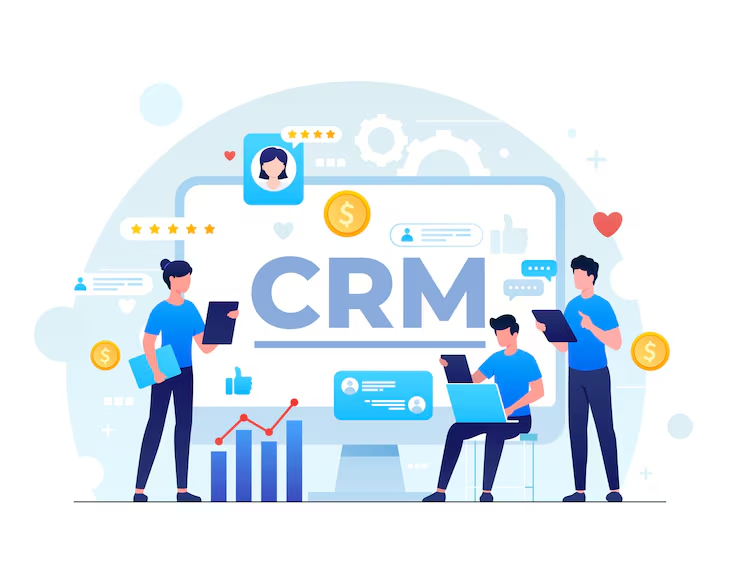
Customer Relationship Management (CRM) software is a business application that helps companies organize customer information, manage sales activities, track conversations, automate follow-ups, and improve customer relationships from one centralized platform.
Instead of maintaining customer details in spreadsheets, emails, or notebooks, a CRM keeps everything in one secure location. Every interaction—whether it’s a phone call, email, meeting, quotation, or support request—is recorded, making it easy for teams to access customer information whenever needed.
A CRM is not only for sales teams. It also helps marketing, customer support, management, and business owners work together more efficiently. By providing complete visibility into customer interactions, businesses can respond faster, improve customer satisfaction, and make better business decisions.
Today, CRM systems have evolved beyond contact management. Modern CRM platforms include automation, artificial intelligence, analytics, workflow management, mobile accessibility, integrations with business applications, and detailed reporting to help organizations grow faster while reducing manual work.
Why Businesses Need CRM
Many businesses struggle with common challenges such as:
- Customer information stored in multiple places
- Missed follow-ups
- Lost sales opportunities
- Poor communication between teams
- Lack of visibility into sales performance
- Manual reporting
CRM software solves these problems by creating a structured system for managing customer relationships throughout the entire sales lifecycle.
2. Who Should Use CRM?
CRM software benefits organizations of every size. Whether you are a startup or an enterprise, managing customer relationships effectively is essential for sustainable growth.
| Industry / Business Type | How CRM Helps |
| Sales Teams | Manage leads, track sales opportunities, automate follow-ups, and improve conversion rates. |
| Manufacturing | Streamline distributor and dealer management, handle quotations, and maintain customer relationships. |
| Healthcare | Organize patient inquiries, appointment scheduling, follow-ups, and communication efficiently. |
| Education | Manage student inquiries, admissions, counseling, enrollment, and ongoing engagement. |
| Real Estate | Track property inquiries, schedule site visits, manage bookings, and nurture buyer relationships. |
| Retail & E-commerce | Enhance customer engagement, manage loyalty programs, personalize offers, and increase repeat purchases. |
| IT & Software Companies | Track prospects, manage proposals, monitor project pipelines, renew contracts, and handle customer support. |
| Financial Services | Simplify client onboarding, policy management, compliance tracking, and customer lifecycle management. |
3. Types of CRM
Not every CRM serves the same purpose. Choosing the right type depends on your business goals.
Operational CRM
Designed to automate daily business operations such as sales, marketing, customer service, and workflow automation.
Best For:
- Growing businesses
- Sales-driven organizations
- Customer support teams
Analytical CRM
Focuses on customer data analysis, reporting, forecasting, and business intelligence.
Best For:
- Business leaders
- Data-driven organizations
- Strategic planning
Collaborative CRM
Allows departments like sales, marketing, and support to share customer information seamlessly.
Best For:
- Medium and large organizations
- Multi-location businesses
- Customer-centric companies
| Feature | Purpose |
| Lead Management | Capture, organize, and nurture leads efficiently. |
| Sales Pipeline | Track every sales opportunity from inquiry to closure. |
| Workflow Automation | Reduce repetitive manual tasks with automated workflows. |
| Email Integration | Manage communication directly within the CRM. |
| WhatsApp Integration | Communicate with customers from one platform. |
| Contact Management | Store complete customer information securely. |
| Task Management | Schedule meetings, reminders, and follow-ups. |
| Reports & Analytics | Monitor business performance using dashboards. |
| Mobile Application | Access CRM anytime from anywhere. |
| AI Capabilities | Predict opportunities and automate recommendations. |
| API Integration | Connect CRM with ERP, accounting, marketing, and third-party tools. |
| Security & Permissions | Protect customer data with role-based access controls. |
4. Key CRM Features
When evaluating CRM software, ensure it includes these essential capabilities.
CRM Features Checklist
Selecting the right CRM goes beyond comparing brands or pricing. The ideal solution should include the essential features your business needs to manage customer relationships, streamline sales processes, and improve team productivity. Use the checklist below to evaluate whether a CRM can support your current operations while scaling with your future growth.
Essential CRM Features Checklist
✔ Lead Management
✔ Contact Management
✔ Sales Pipeline Management
✔ Opportunity Tracking
✔ Workflow Automation
✔ Email Integration
✔ WhatsApp Integration
✔ Calendar & Task Management
✔ Mobile Application
✔ AI-Powered Assistance
✔ Reports & Analytics Dashboards
✔ Custom Fields & Modules
✔ API & Third-Party Integrations
✔ Security & Access Controls
✔ Role-Based User Management
✔ Multi-User Collaboration
✔ Cloud-Based Accessibility
✔ Data Backup & Recovery
5. Benefits of CRM Software
Implementing the right CRM delivers measurable business benefits across departments.
Better Customer Relationships
Every interaction is recorded, enabling personalized communication and improved customer satisfaction.
Increased Sales
Sales teams never miss important follow-ups, resulting in higher conversion rates.
Improved Productivity
Automation reduces repetitive administrative work, allowing employees to focus on revenue-generating activities.
Better Team Collaboration
Sales, marketing, and customer support work from the same customer database, eliminating information silos.
Accurate Business Insights
Dashboards and reports provide real-time visibility into sales performance, customer behavior, and business growth.
Higher Customer Retention
Timely communication and organized customer management increase repeat business and long-term loyalty.
6. CRM Pricing Guide
One of the biggest questions businesses ask before investing in CRM software is, “How much does it cost?” The answer depends on factors such as the number of users, required features, deployment type, integrations, and customization.
A small business with a simple sales process may need only a basic CRM, while a growing enterprise often requires advanced automation, AI capabilities, workflow customization, and extensive integrations.
The table below provides a general pricing guide to help businesses estimate their CRM investment.
| Annual Budget | Recommended CRM | Best For |
| Under ₹50,000 | Zoho CRM Standard | Small businesses & startups |
| ₹50,000 – ₹2 Lakhs | Freshsales | Growing sales teams |
| ₹2 Lakhs – ₹10 Lakhs | HubSpot CRM Professional | Mid-sized organizations |
| ₹10 Lakhs+ | Salesforce | Large enterprises |
| Enterprise Budget | Microsoft Dynamics 365 | Multi-location & enterprise businesses |
What Influences CRM Pricing?
Several factors affect the total implementation cost:
- Number of users
- Cloud or On-Premise deployment
- Third-party integrations
- Workflow automation
- AI features
- Custom reports
- Implementation & training
- Annual support
Pro Tip: Don’t choose a CRM solely because it has the lowest subscription cost. Consider the long-term value, scalability, and implementation support.
7. How to Choose the Right CRM
With hundreds of CRM solutions available, selecting the right platform can feel overwhelming. Instead of focusing only on brand names, evaluate your business requirements carefully.
1. Define Your Business Goals
Ask yourself:
- Do you want better lead management?
- Are you looking to automate sales?
- Do you need customer service management?
- Do you require detailed reporting?
Knowing your goals helps narrow down the right CRM.
2. Understand Your Team Size
The CRM should support your current team while allowing room for future growth.
| Company Size | Recommended CRM |
| 1–10 Employees | Zoho CRM |
| 11–50 Employees | Freshsales |
| 50–200 Employees | HubSpot CRM |
| 200–1000 Employees | Salesforce |
| Enterprise | Microsoft Dynamics 365 |
3. Check Integration Capabilities
Your CRM should integrate with tools you already use, such as:
- Gmail
- Outlook
- ERP
- Accounting Software
- Marketing Platforms
- Website Forms
- Payment Systems
4. Evaluate Ease of Use
A powerful CRM is valuable only if your team actually uses it. Look for:
- Simple interface
- Easy navigation
- Mobile accessibility
- Minimal training requirements
5. Consider Future Growth
Choose a CRM that can scale with your business instead of requiring a complete replacement after a few years.
8. Compare Top CRM Software
Choosing the best CRM depends on your business size, budget, and operational requirements.
| CRM | Best For | Key Strength |
| Salesforce | Large Enterprises | Advanced customization & AI |
| HubSpot CRM | Marketing & Sales Teams | Easy to use with powerful automation |
| Zoho CRM | Small Businesses | Affordable and feature-rich |
| Freshsales | Growing Businesses | Excellent lead management |
| Microsoft Dynamics 365 | Enterprises | Deep Microsoft ecosystem integration |
Quick Overview
Salesforce
Ideal for enterprises requiring advanced automation, AI insights, and extensive customization.
HubSpot CRM
A great choice for businesses focused on inbound marketing and customer engagement.
Zoho CRM
Affordable, flexible, and suitable for startups and SMEs looking for an all-in-one CRM.
Freshsales
Designed for sales-driven organizations that want intuitive pipeline management and automation.
Microsoft Dynamics 365
Best suited for enterprises already using Microsoft products and requiring advanced business process management.
Need Help Choosing the Right CRM?
With so many CRM solutions available, selecting the right one can be challenging. SmartBizSoft simplifies the decision-making process by providing unbiased CRM comparisons, feature insights, pricing guidance, and expert recommendations, helping businesses choose a solution that aligns with their goals, budget, and future growth.
9. CRM Implementation Checklist
Implementing a CRM successfully requires more than just choosing the right software. Proper planning, clean data, defined business goals, and team readiness play a critical role in ensuring a smooth deployment. By completing the checklist below before implementation, businesses can reduce risks, improve user adoption, and maximize the return on their CRM investment.
Business Readiness Checklist
✔ Business objectives clearly defined
✔ CRM budget approved
✔ Number of users finalized
✔ Customer data cleaned and organized
✔ Required integrations identified
✔ Existing business workflows documented
✔ User roles and access permissions assigned
✔ Security and compliance requirements reviewed
✔ Employee training plan prepared
✔ CRM demo and evaluation completed
✔ Implementation partner selected
✔ Data migration strategy finalized
✔ Go-live timeline established
✔ Data backup completed
✔ Performance KPIs and success metrics defined
Why This Checklist Matters
Businesses that complete these preparation steps before implementation typically experience faster deployment, fewer technical challenges, higher user adoption, and a smoother transition. A well-planned CRM implementation not only minimizes disruptions but also enables teams to start realizing productivity gains and improved customer management from day one.
How SmartBizSoft Supports Your CRM Journey
A successful CRM implementation starts with choosing the right solution and following a structured deployment plan. SmartBizSoft helps businesses evaluate CRM platforms, compare features, understand implementation requirements, and make informed decisions that reduce risks while ensuring long-term business success.
10. Common Buying Mistakes
Many CRM projects fail because organizations rush into purchasing software without proper planning.
Avoid these common mistakes:
Buying Only Because It’s Popular
A well-known CRM isn’t automatically the best fit for your business.
Ignoring Integration Requirements
Ensure the CRM works with your ERP, accounting software, email platform, and other essential business applications.
Choosing Based Only on Price
The cheapest option may lack important features that your business will need later.
Underestimating Implementation
CRM implementation requires planning, data migration, configuration, testing, and employee training.
Ignoring User Adoption
Even the best CRM will fail if employees don’t use it consistently.
Not Planning for Growth
Choose software that can grow alongside your business rather than requiring replacement within a few years.
Recommended CRM by Industry
Different industries have different CRM requirements.
| Industry | Recommended CRM |
| Manufacturing | Salesforce |
| Healthcare | Microsoft Dynamics 365 |
| Education | HubSpot CRM |
| Retail | Zoho CRM |
| Financial Services | Salesforce |
| Hospitality | Freshsales |
| IT & SaaS | HubSpot CRM |
| Real Estate | Zoho CRM |
11. Final Recommendation
Choosing the right CRM is not just about selecting the most popular software—it’s about finding a solution that matches your business processes, supports your team, and scales with your future growth. The right CRM can improve customer relationships, increase productivity, streamline operations, and provide valuable business insights.
Before making a decision, compare features, pricing, integrations, security, and implementation requirements rather than focusing only on cost.
At SmartBizSoft, we make this process easier by providing unbiased software comparisons, detailed buying guides, feature breakdowns, and expert insights to help businesses confidently select the CRM that delivers the best value for their needs. Whether you’re a startup exploring your first CRM or an enterprise planning a digital transformation, making an informed choice today can create lasting business success tomorrow.
Explore the Best CRM Software for Growing Businesses and choose the solution that fits your goals, budget, and future growth.
https://smartbizsoft.com/product-category/best-crm-software-for-growing-businesses-2026/
12. Frequently Asked Questions (FAQs)
1. What is CRM software?
CRM (Customer Relationship Management) software helps businesses manage customer information, sales activities, and interactions from a centralized platform to improve efficiency and customer relationships.
2. Who should use CRM software?
CRM is suitable for businesses of all sizes, including startups, small and medium-sized enterprises (SMEs), and large organizations across industries such as retail, healthcare, manufacturing, education, and IT.
3. What are the key benefits of using a CRM?
A CRM helps improve customer relationships, streamline sales processes, automate repetitive tasks, increase team productivity, and provide valuable business insights through reporting and analytics.
4. How do I choose the right CRM for my business?
Consider your business size, budget, required features, integration needs, scalability, ease of use, and the level of customer support offered before selecting a CRM solution.
5. Can CRM integrate with other business applications?
Yes. Most modern CRM platforms integrate with ERP systems, email services, accounting software, marketing tools, WhatsApp, and other third-party applications through APIs.
6. How long does CRM implementation take?
The implementation timeline depends on the complexity of your business requirements, data migration, customizations, and integrations. It can range from a few weeks to several months.
7. Is cloud-based CRM better than on-premise CRM?
For most businesses, cloud CRM offers greater flexibility, lower maintenance costs, automatic updates, and easier scalability, making it the preferred choice.
8. How can SmartBizSoft help in choosing the right CRM?
SmartBizSoft provides detailed CRM comparisons, feature analysis, pricing insights, and expert buying guides to help businesses identify the CRM solution that best fits their operational requirements and growth objectives.

